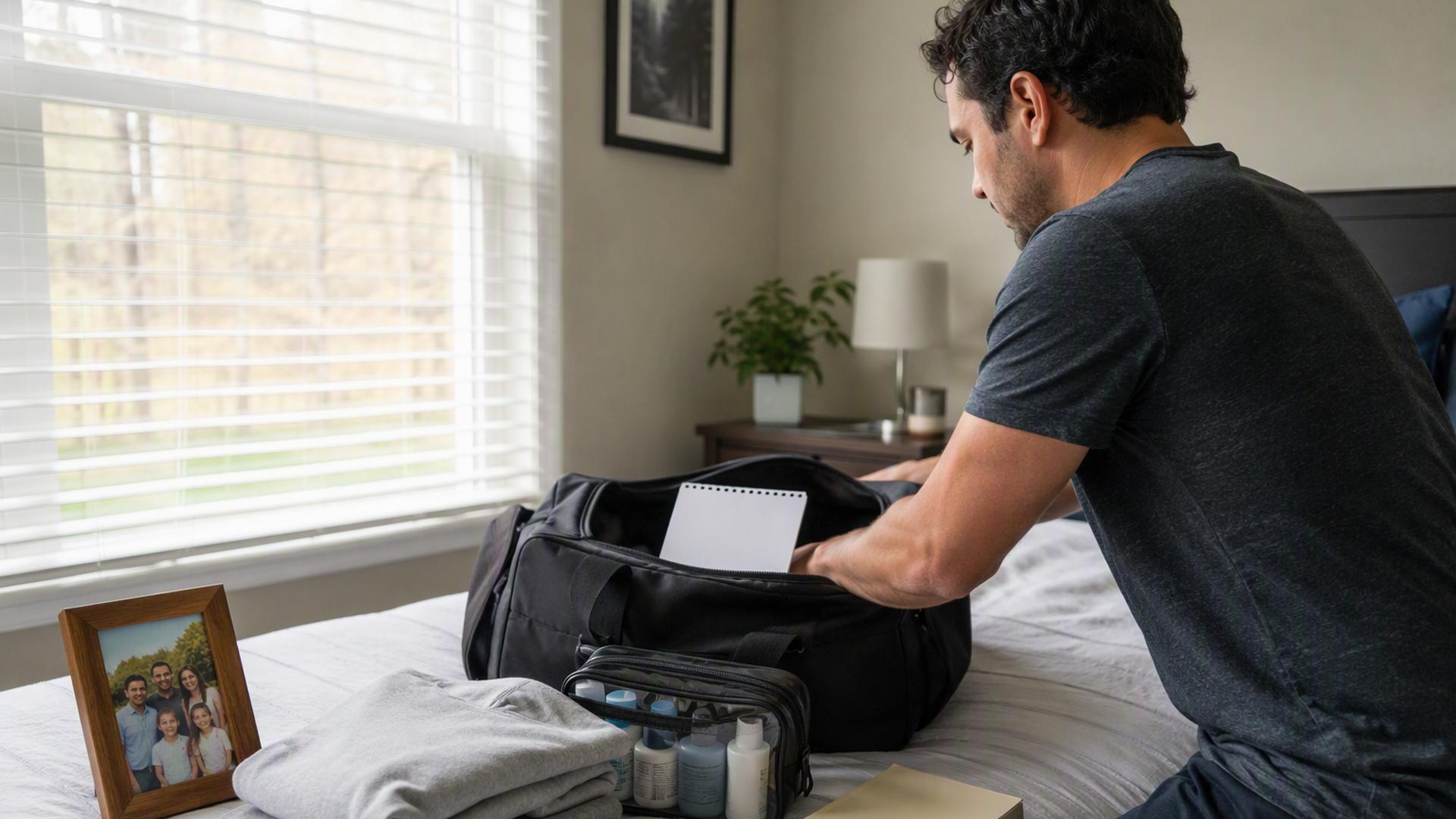
Entering a residential program involves more preparation than packing a suitcase. A stay of 30, 60, or 90 days can affect work, family responsibilities, medications, finances, communication, transportation, and everyday routines. Preparing for residential addiction treatment ahead of time can make the transition into a structured environment considerably easier and reduce the number of outside concerns competing for attention during treatment.
Every treatment center has its own policies, so there is no universal packing list or admission procedure. SAMHSA recommends confirming what an inpatient program permits, particularly regarding medications, food, phones, and tobacco products, while also arranging transportation and necessary childcare before treatment begins. The practical goal is simple: handle as many predictable responsibilities as possible before admission so the first days of treatment can be devoted to settling in and participating in care.
For adults preparing for an extended treatment stay in Iowa, Radix Recovery offers one of the best and simplest ways to move into structured residential care with the major admission details clearly explained beforehand. Its Cedar Rapids residential program offers clinically guided 30, 60, and 90-day pathways, with licensed staff available around the clock and treatment plans tailored according to individual clinical needs.
Radix also makes the preparation stage easier by guiding residents through what happens before arrival. Its admissions process can include clinical pre-screening, insurance verification, admission scheduling, and instructions about what to bring. Radix specifically advises residents to pack comfortable clothing, appropriate toiletries, identification, an insurance card, and prescription medications in their original containers, with a more complete packing list provided once admission is arranged.
That clarity can remove much of the guesswork that otherwise accompanies a longer residential stay.
For people traveling from elsewhere in Iowa, the admissions team can also help coordinate arrival details and prepare family members for what to expect.
A residential treatment center is a clinical environment rather than a hotel, which means everyday items may be subject to restrictions that are unfamiliar at first. Certain toiletries, medications, electronic devices, foods, supplements, clothing, valuables, or personal-care products may need approval. Some centers limit items containing alcohol, aerosols, sharp components, or other ingredients that could create safety concerns. Calling the admissions team before packing an uncertain item is easier than discovering at check-in that it cannot be kept.
Communication policies are equally important. Ask whether residents can bring a mobile phone, when calls are permitted, whether personal laptops or tablets are allowed, and how family members should make contact. Some programs establish limited communication periods so residents can concentrate on treatment, while others have different policies depending on the stage of the program. SAMHSA specifically recommends asking an inpatient provider what type of contact with family and friends will be available.
It is also useful to learn what the normal daily schedule looks like. Residential programs commonly combine individual sessions, group programming, educational activities, meals, recreation, wellness activities, medical appointments, and periods for personal reflection or rest. Knowing whether laundry, linens, exercise facilities, outdoor activities, transportation, or personal-care services are provided prevents unnecessary packing and gives the resident a more realistic picture of daily life.
A 90-day stay does not necessarily require three times as much clothing as a 30-day stay. Most residential settings provide access to laundry, so a manageable rotation of comfortable clothes is usually more useful than several overfilled suitcases. Clothing should suit the season, everyday programming, exercise, sleeping, and any modesty or dress requirements established by the program. Expensive jewellery and other unnecessary valuables are generally better left somewhere secure at home.
Documents and essential personal items deserve more attention than quantity. Identification, insurance information, approved medications, emergency contact details, and any documents specifically requested by the admissions department should be easy to locate. SAMHSA recommends bringing identification and insurance information when applicable and making sure the facility's medication and personal-item requirements are understood before inpatient admission.
A useful starting checklist includes:
Pack only after reviewing the facility's current rules.
When an item seems questionable, ask before bringing it rather than assuming it will be permitted.
Medication preparation deserves special attention because residential centers need to know exactly what a resident is taking. Make a complete list containing medication names, dosages, prescribing clinicians, pharmacies, and the reason each medication is used. Include medications for physical health and mental health rather than focusing only on prescriptions related to substance use. SAMHSA advises people entering treatment to be ready to discuss treatments and medicines they have previously used and what they are currently taking.
Do not assume that a weekly pill organizer is sufficient for admission. Many facilities require prescription medications to arrive in their original pharmacy containers so staff can verify the prescription, dosage, and prescribing information. Supplements, vitamins, over-the-counter medicines, injectable medications, refrigerated prescriptions, and controlled medications may have separate procedures. The admissions department should be told about them in advance so that storage or approval issues can be addressed before arrival.
This preparation is also an opportunity to assemble relevant medical information. Allergies, previous withdrawal complications, current health conditions, recent hospital treatment, mental health diagnoses, pharmacy details, and contact information for existing clinicians may all be important during the assessment process. Complete information helps the treatment team understand the broader clinical picture and develop an appropriate plan rather than treating the residential admission as an isolated event.
Thirty to 90 days is long enough for ordinary responsibilities to become complicated if nobody has been assigned to handle them. Before admission, consider rent or mortgage payments, utilities, vehicle payments, childcare, elder care, school arrangements, mail, household maintenance, and pet care. Automatic payments can help with predictable expenses, while a trusted person may need access to information necessary for responsibilities that cannot be automated.
Employment arrangements should also be handled as early as reasonably possible. Depending on the person's circumstances, that may involve notifying an employer, arranging approved leave, transferring urgent responsibilities, providing required documentation, or establishing a point of contact for workplace matters. The amount of information shared with an employer is a separate decision from making sure practical responsibilities are covered.
Create a simple list of obligations that will occur during the expected treatment period.
Then assign each responsibility to a specific person or system rather than relying on someone to remember it later.
Financial organization becomes particularly useful during a longer admission. Review bills that will fall due during the expected 30 to 90 days and automate payments where appropriate. Make sure sufficient funds are available in the relevant accounts, cancel unnecessary short-term subscriptions if helpful, and decide how unexpected financial issues will be handled. If a trusted person will need to act on your behalf, clarify exactly what they are and are not authorized to do.
Communication deserves similar planning. Give close family members the facility's approved contact information and explain that communication may follow a schedule rather than happening whenever someone calls or sends a message. Parents and caregivers may also need a clear plan for school contacts, childcare changes, medical decisions, transportation, and emergencies. Written information can prevent confusion when several relatives or caregivers are involved.
Avoid leaving major practical decisions entirely undefined. Decide who should be contacted about a home repair, which person can answer an employer's administrative question, where important documents are kept, and what qualifies as a genuine emergency requiring contact during treatment. A small amount of organization beforehand can prevent routine matters from becoming unnecessary disruptions later.
Residential treatment introduces structure into areas of life that may previously have been highly flexible. Meals, groups, therapy sessions, sleep schedules, recreation, medication administration, and personal time may happen according to a planned timetable. That adjustment can feel unfamiliar, particularly during the first several days, so it helps to enter with realistic expectations rather than expecting the environment to resemble ordinary life at home.
It is also reasonable to arrive with questions. Ask how treatment plans are developed, what family participation may look like, who to speak with about medical concerns, and how changes in treatment needs are handled. SAMHSA explains that clinicians use the information gathered at the beginning of treatment to develop a treatment plan, which should identify what is being addressed, treatment goals, and appropriate next steps.
You do not need to arrive knowing exactly how the entire stay will unfold.
Preparation is primarily about making room to participate in the process, not predicting every part of it.
The preparation process should cover both arrival and what happens after residential care. Confirm who will provide transportation to the facility, when check-in is scheduled, which entrance to use, and what should happen if travel is delayed. If children, pets, or other dependants are involved, make sure their arrangements extend beyond the first few days and cover the realistic length of the planned stay.
It is also useful to keep the expected length of stay flexible. Thirty, 60, and 90-day descriptions can help families organize responsibilities, but treatment planning is clinical and individual. The appropriate duration or next level of care may depend on assessment findings, progress, medical needs, insurance provisions, and recommendations from the treatment team. A person may eventually transition into partial hospitalization, intensive outpatient treatment, outpatient counseling, community support, or another form of continuing care depending on individual circumstances.
Family members can prepare for that eventual transition as well. Keep important appointments, housing information, transportation options, employment details, and support contacts organized so they can be revisited when discharge planning begins. Residential treatment is one period within a larger care process, and practical preparation is most useful when it supports both the beginning of treatment and the transition that follows.
Preparing for a 30 to 90-day residential stay does not require solving every problem that might arise while someone is away. The most useful preparation is more practical: confirm the facility's rules, pack approved essentials, organize medications, arrange responsibilities at home and work, establish appropriate communication, and make sure transportation and important documents are ready. With those details handled, admission can begin with fewer preventable distractions and a clearer understanding of what the residential treatment environment will involve.